Search the evidence

Find the signal.

Search titles, impact clusters, countries, organizations and the full text of every analysis.

7 stories found

Cognition & learningGlobal+2 clusters01

UN Global Dialogue on AI Governance / AI Child Safety Pledge

The UN opened its first government-level Global Dialogue on AI Governance in Geneva, and Secretary-General António Guterres used the launch to argue that AI capability growth is moving faster than regulatory capacity. Reuters reports that he proposed an AI Child Safety Pledge, focused on requiring developers to show systems are safe for children before release, and warned about risks from AI companions, manipulative systems, harmful content exposure, and unequal concentration of AI power across countries and firms.
2 min
Cognition & learningMinnesota, United States+4 clusters02

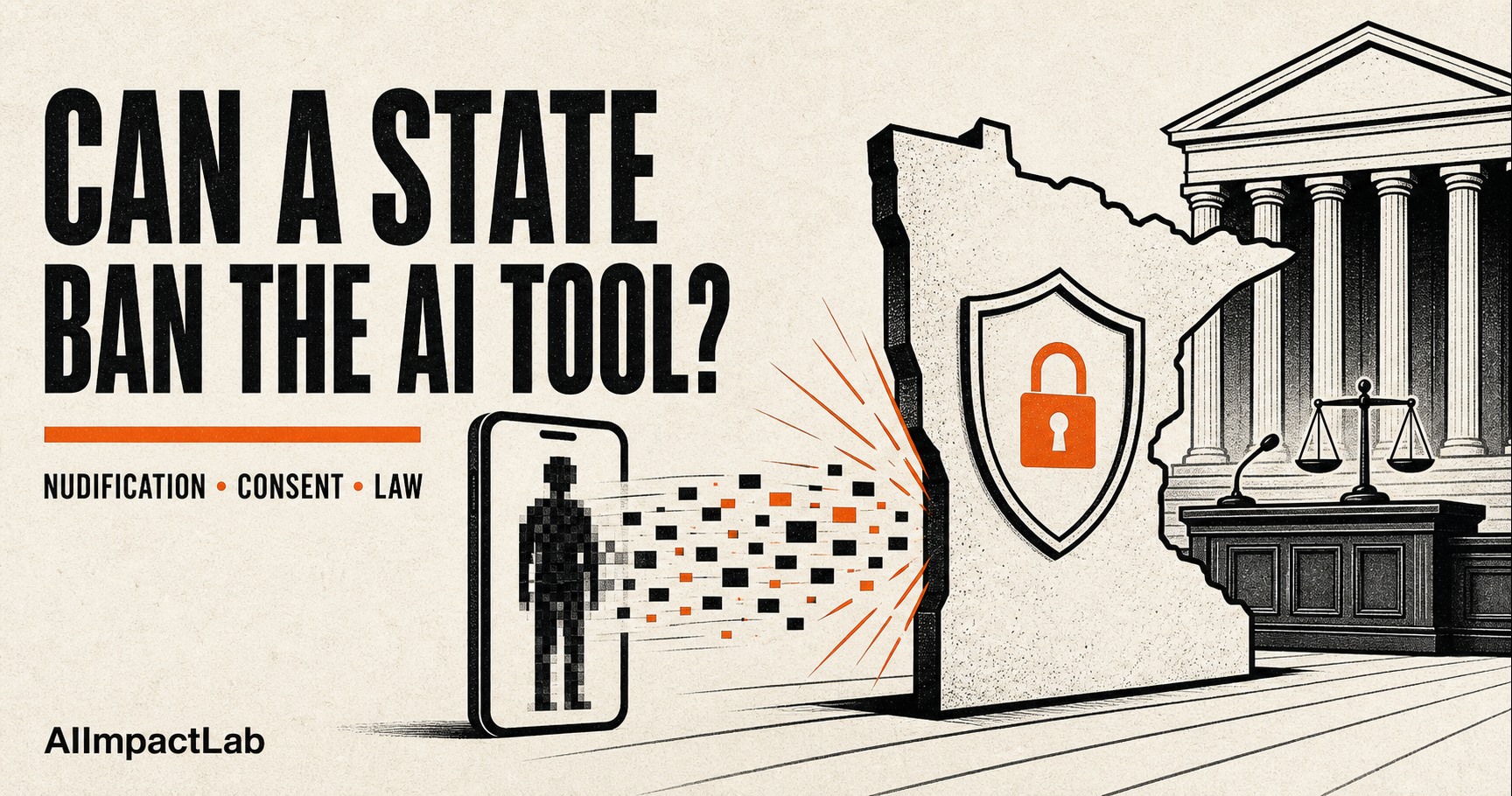
Minnesota’s “nudification” ban puts AI toolmakers on trial

xAI is suing Minnesota days before a first-in-the-nation law is due to take effect banning sites and apps that offer AI “nudification” tools. The company says it does not dispute the state’s interest in stopping nonconsensual synthetic nude images, but argues that regulating the tool itself sweeps in protected or consensual expression. Minnesota’s approach moves responsibility upstream from people who create and distribute abusive images to companies that make the capability available. The court fight will test how far states can go to prevent sexualized deepfake harm before a victim has to chase an image across the internet.

3 min
Work & marketsUnited States+3 clusters03

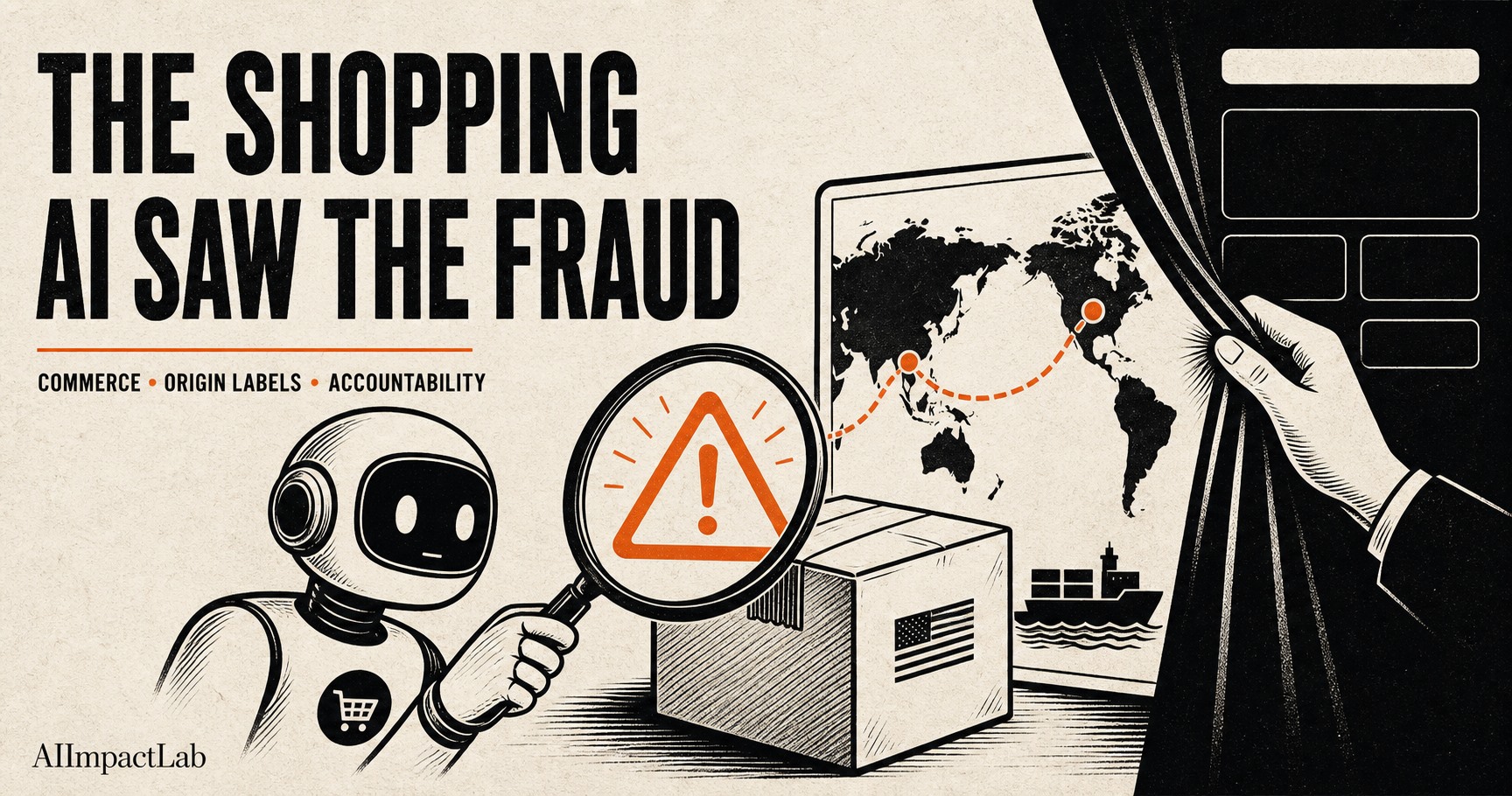
Shopping chatbots can see “Made in USA” fraud—and still look away

A Columbia study of Amazon’s and Walmart’s shopping chatbots says both systems can detect conflicts between “Made in USA” marketing and product-origin information, yet the platforms do not consistently surface those conflicts to shoppers. The researchers describe examples in which apparent origin fraud was common and say Amazon’s assistant refused some Made-in-America questions while allowing equivalent Made-in-China queries. Their central claim is uncomfortable: the gap was not simply a technical failure. When a shopping agent controls what buyers can ask and which evidence they see, product recommendations become a form of platform governance.

3 min
Cognition & learningChina+4 clusters04

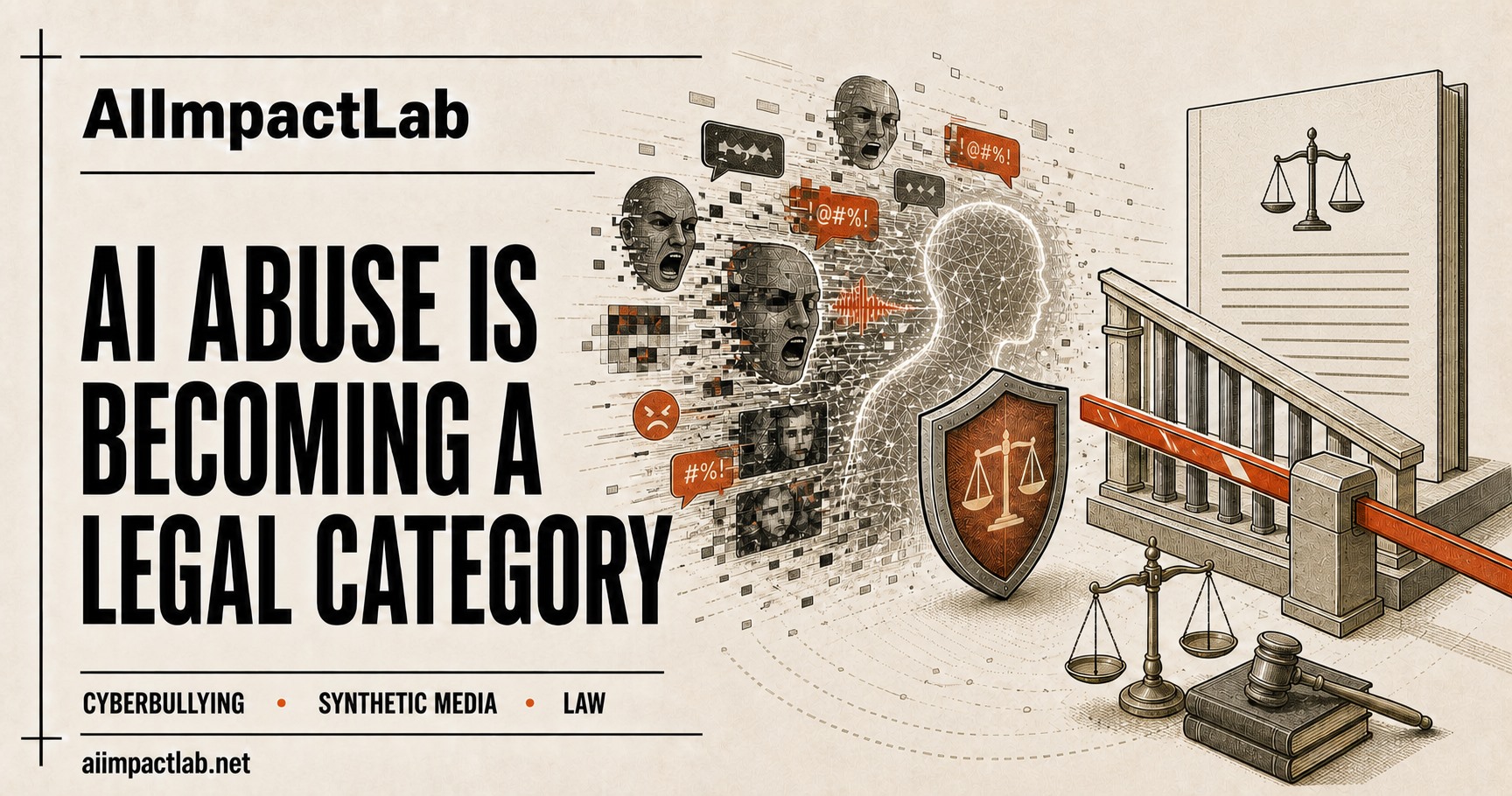
China’s cyberbullying draft makes AI-enabled abuse a legal category

China has released a draft cyberbullying law that covers AI-enabled abuse, Reuters reports. The proposal is significant because generative systems can make impersonation, harassment, sexualized imagery, coordinated attacks, and repeated targeting faster and cheaper. But naming AI in law is only the beginning. Effective protection depends on precise definitions, rapid preservation of evidence, accessible reporting and appeal systems, duties for platforms and model providers, remedies for victims, and safeguards that prevent an anti-abuse framework from becoming a tool for suppressing lawful speech.

3 min
Social good & healthGlobal+2 clusters05

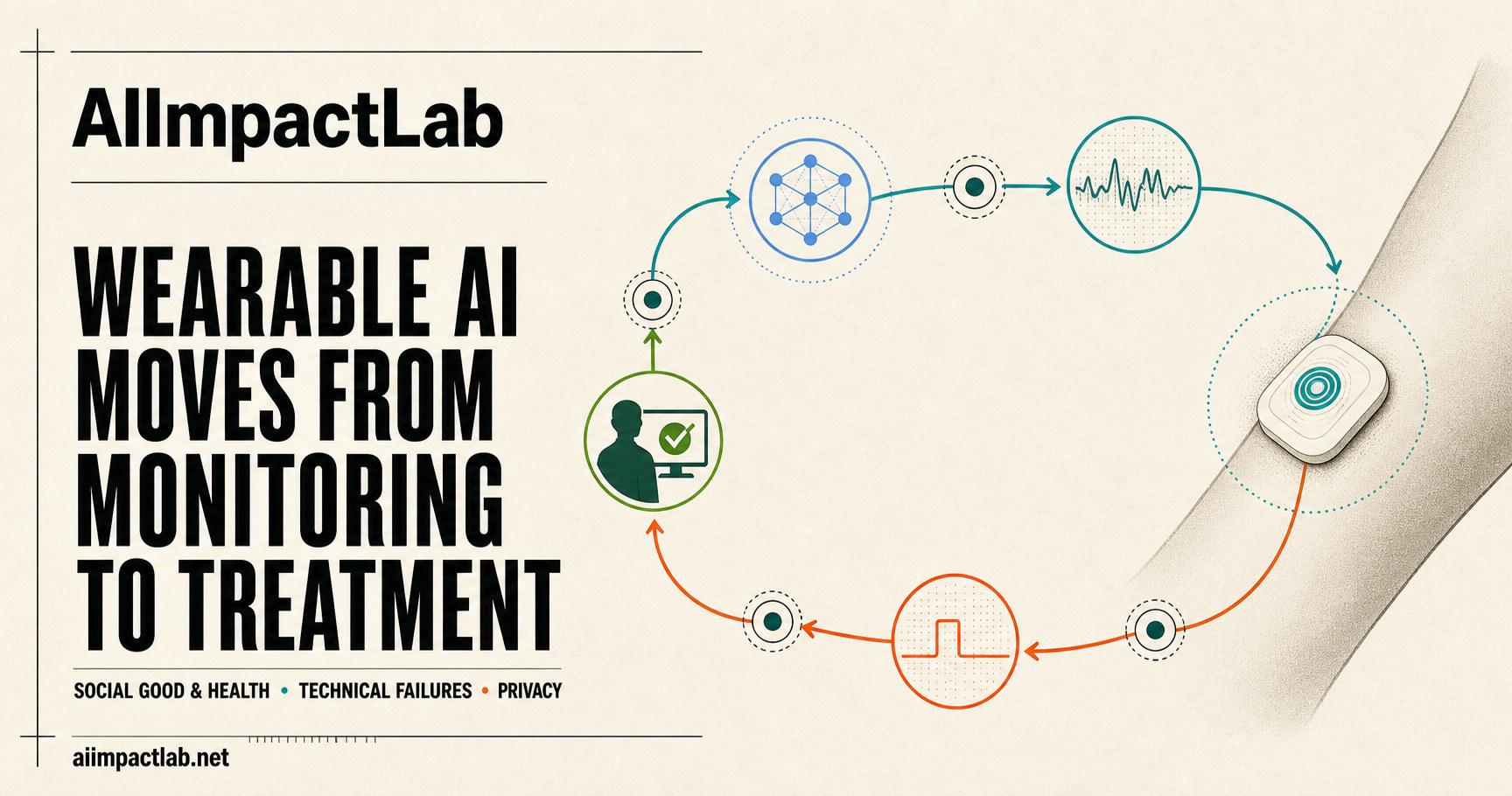
Gao et al., “AI-powered closed-loop wearable bioelectronics for personalized and autonomous healthcare”

A Nature Sensors review argues that AI-powered closed-loop wearables could move healthcare devices beyond passive data collection by connecting continuous biosensing directly to AI-guided decisions and therapeutic intervention. The authors emphasize that clinical value depends on the coordinated system—sensing, control, treatment, and human oversight—not any component alone. Long-term interface stability, robust control, transparent safety mechanisms, and evidence of patient benefit remain prerequisites for scalable use.

3 min
PrivacyGlobal+1 clusters06

China National Vulnerability Database warning on Claude Code

Reuters reports that a cybersecurity platform operated by China’s industry ministry warned of a serious “backdoor” risk in Anthropic’s Claude Code versions 2.1.91 through 2.1.196, alleging a built-in monitoring mechanism could transmit geographic-location and identity-related identifiers to remote servers without user consent. Reuters also reports that Alibaba banned employee use of Claude Code after scrutiny of features identifying China-linked users, while Anthropic said the mechanism was an experimental anti-abuse measure and that Claude access was not permitted in China.

2 min
Cognition & learningEuropean Union+2 clusters07

UK AI-enabled toy safety consultation

The UK government launched a toy-safety call for evidence that explicitly covers internet-connected and AI-enabled toys, with comments open through October 6, 2026. The government says the review will consider emerging risks from AI-enabled toys and connected products, and the consultation references the EU AI Act example of prohibiting AI-enabled toys that encourage children toward risky behavior.

2 min