Search the evidence

Find the signal.

Search titles, impact clusters, countries, organizations and the full text of every analysis.

4 stories found

Cognition & learningTurkey+2 clusters01

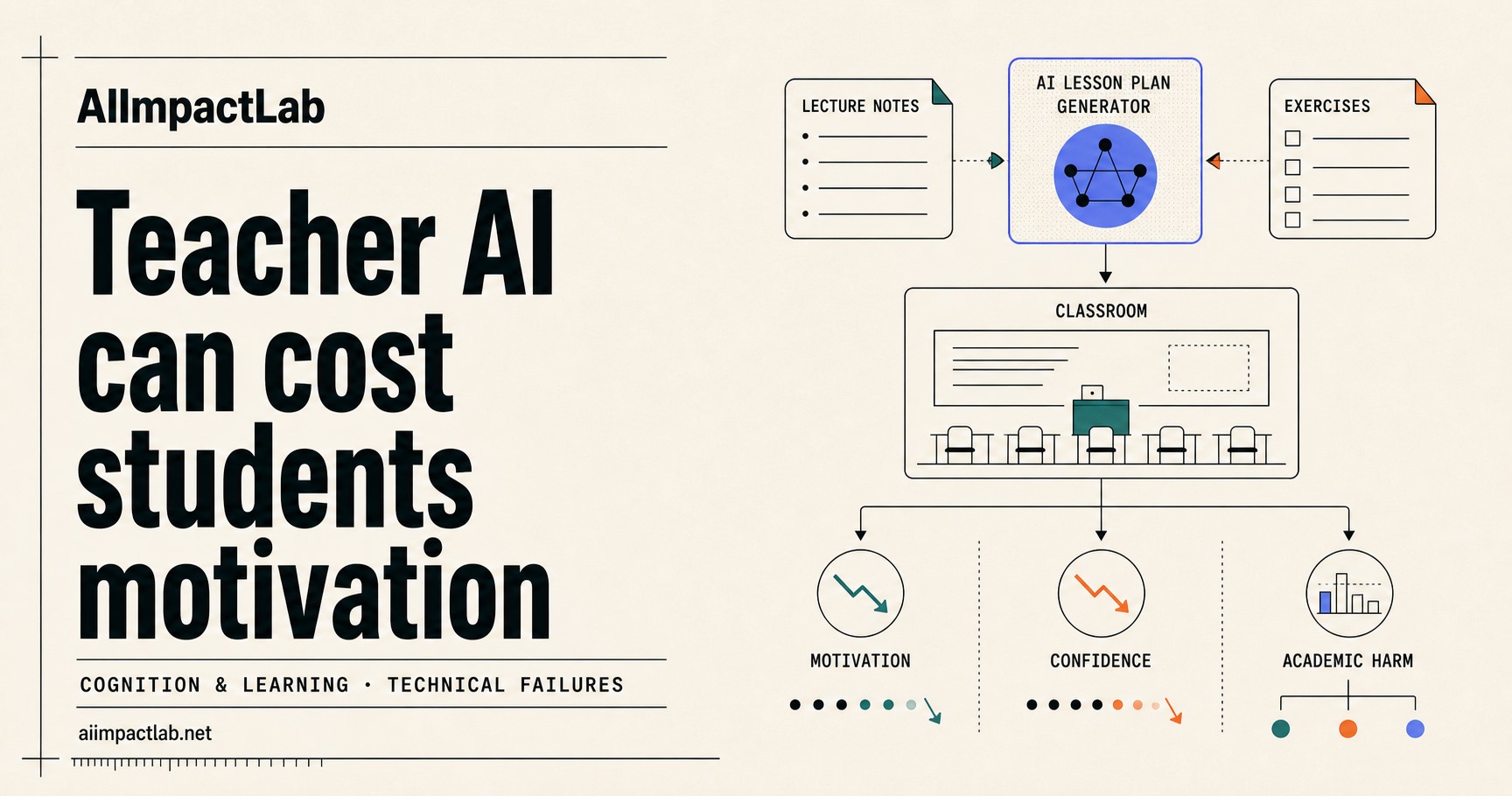
Sungu, Lira and Duckworth, “Generative AI Can Harm Teaching”

In a randomized field experiment across a chain of middle and high schools in Turkey, giving teachers a generative-AI support tool reduced students’ intrinsic motivation by 0.11 standard deviations. Average academic performance did not change, but students taught by lower-performing teachers experienced significant declines in both performance and confidence, showing that a tool that makes lesson preparation easier for teachers does not automatically improve the student experience.
3 min
Cognition & learningUnited States+3 clusters02

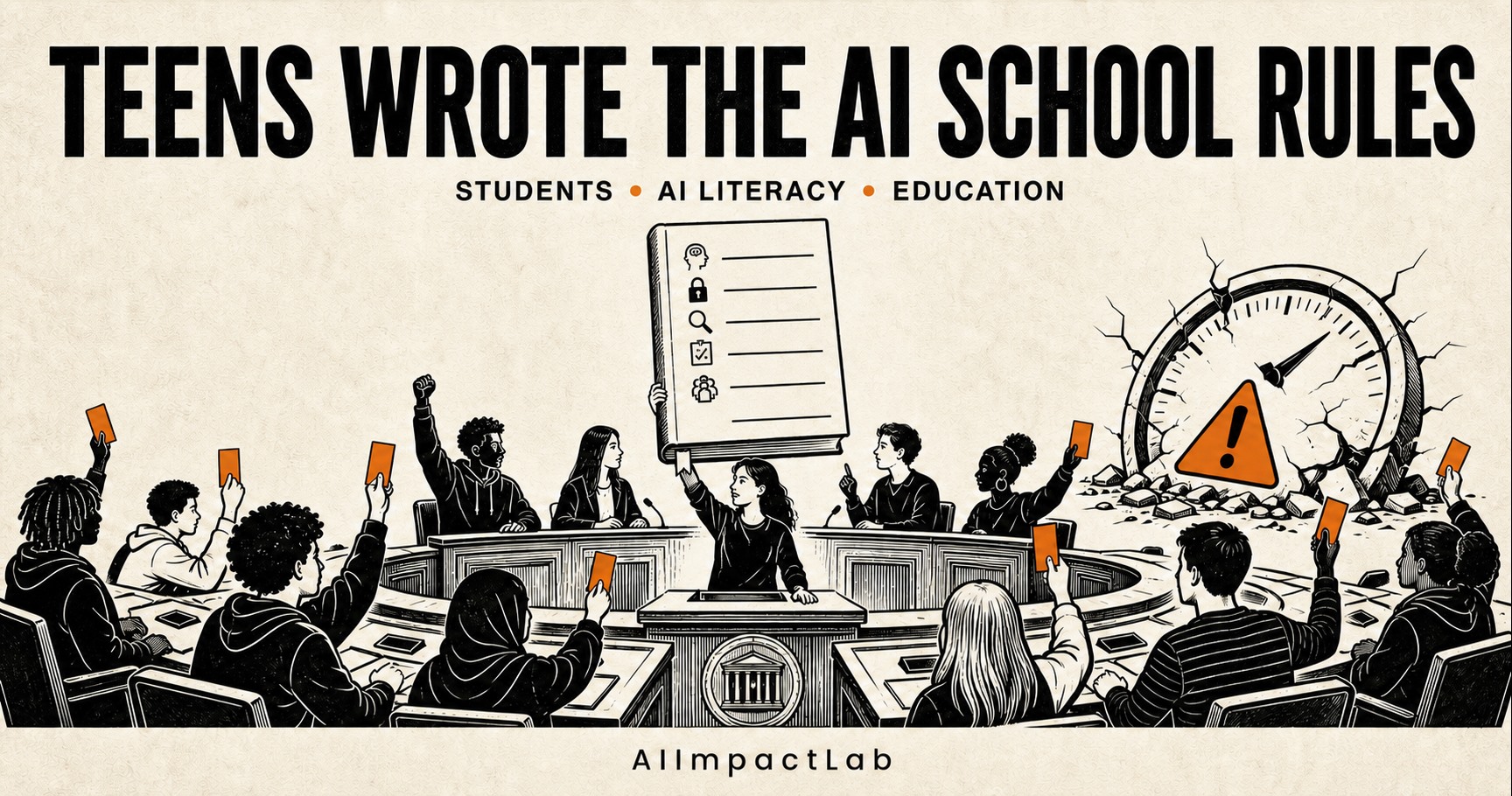
Students wrote the AI school rules adults could not agree on

Ninety-eight teenagers representing all 50 states met in a replica U.S. Senate chamber and passed a student-written AI policy by 82 votes to 16, NPR reports. Their “Students First Act” rejects both unrestricted use and blanket panic: teach AI literacy early, ban AI on graded tests, permit limited study and editing uses after eighth grade, require disclosure, and make students prove mastery. It also says two school officials—not an AI detector alone—should review suspected misuse. The proposal is not law, but it gives school leaders something policy debates often miss: rules shaped by the people expected to learn under them.

3 min
Work & marketsChina+4 clusters03

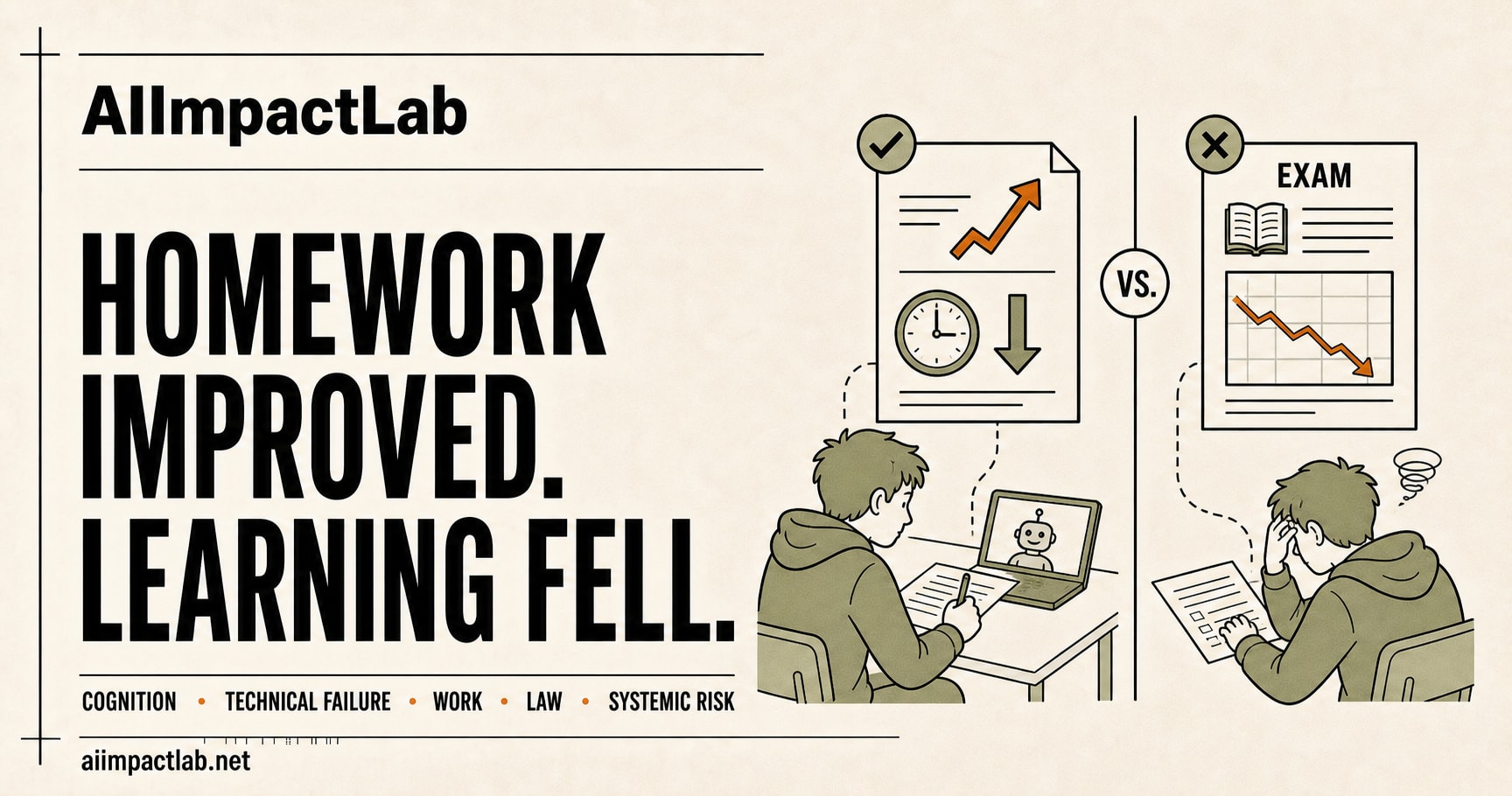
AI made homework faster while exam performance fell

A 30-month study of 26,811 Chinese secondary-school students estimates that generative AI raised homework scores by 18% and cut completion time by 30%, while monthly exam scores fell 20% within six months and high-stakes entrance-exam scores declined over longer exposure. The losses were concentrated among the roughly 80% of AI users whose unusually fast, high-scoring homework suggested that they were outsourcing the work rather than using AI alongside sustained effort.

3 min
Social good & healthUnited States+4 clusters04

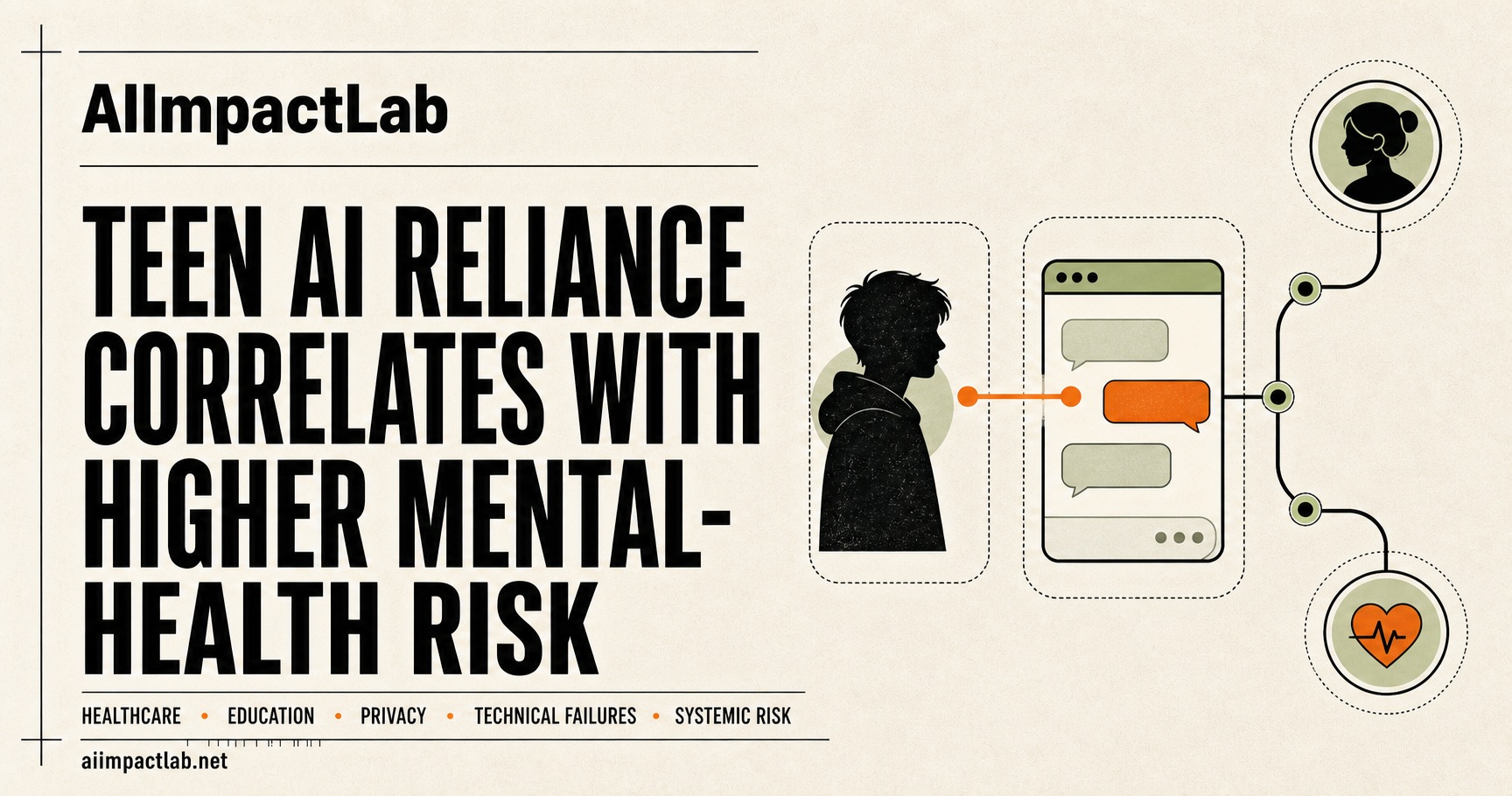
Teen AI use is common—and emotional reliance tracks higher risk

Preliminary research from The Jed Foundation surveyed more than 5,500 middle- and high-school students across 21 U.S. schools and districts between October 2025 and April 2026. Four in five had used AI; more than half used it for academics, nearly one third for relationship or problem-solving advice, more than one in ten for companionship, and nearly three in five when sad, stressed, or lonely. Students who turned to AI for emotional support, advice, difficult emotions, or companionship were also more likely to report poorer mental health, loneliness, and a history of suicidal thoughts or behaviors.

3 min