Search the evidence

Find the signal.

Search titles, impact clusters, countries, organizations and the full text of every analysis.

11 stories found

Work & marketsUnited States+3 clusters01

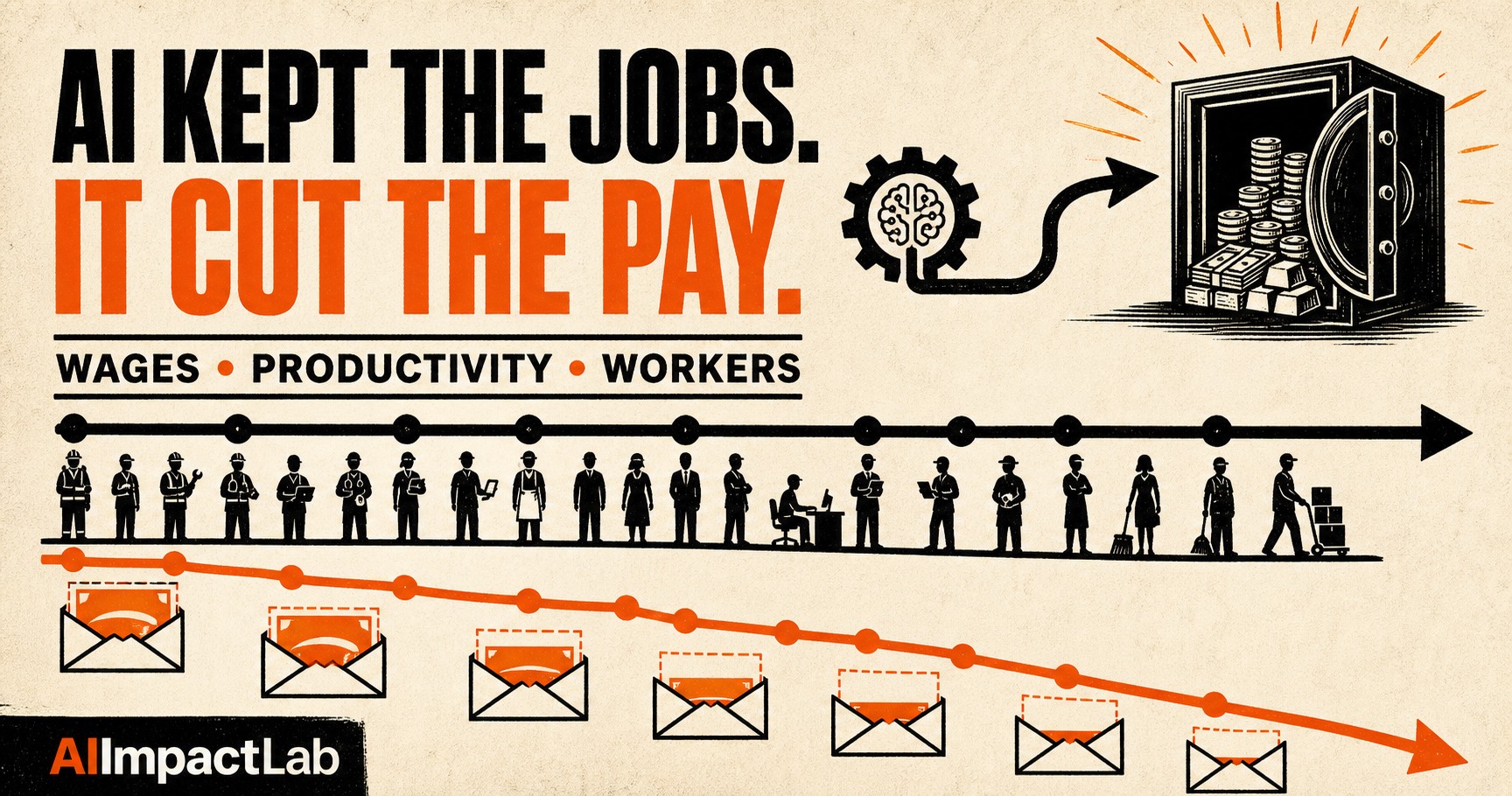
AI may be cutting pay before it cuts jobs

A new study of the United States labor market finds that occupations with high observed AI use experienced 6.7 percentage points slower real-wage growth after 2023, while their overall employment showed no statistically detectable change. The analysis matches Bureau of Labor Statistics data from 2015–2025 with observed Claude usage across 321 occupations. The effect was concentrated lower in the wage distribution: the bottom quartile saw a 10.7% relative decline in wage growth, while the top quartile showed no significant effect. The result challenges the idea that stable headcount means workers are unharmed; employers may capture early productivity gains through wage compression before aggregate job losses appear.
4 min
Work & marketsUnited States and China+5 clusters02

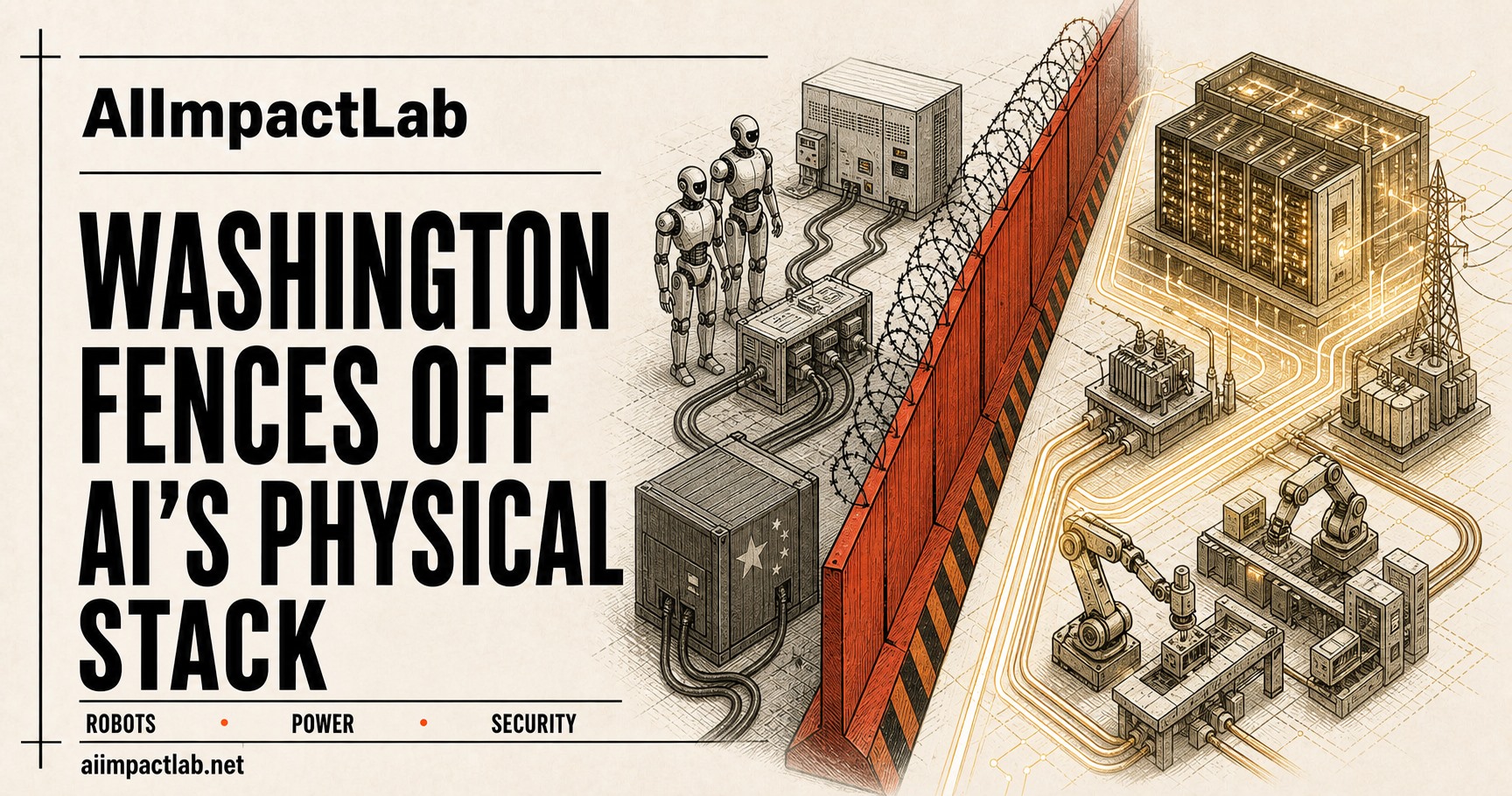
The U.S. AI race now runs through robots and power hardware

The Trump administration is moving to bar new Chinese-made robots and power inverters from the U.S. market, Reuters reports, framing connected machines and energy-control equipment as risks to the domestic AI buildout. The policy makes the physical stack impossible to ignore: AI depends not only on chips and models, but also on robots, grid-connected electronics, factories, supply chains, and trusted software updates. Security may justify tighter controls, but restrictions also change prices, competition, deployment speed, and the industrial capacity needed to replace excluded suppliers.

3 min
Work & marketsGlobal+3 clusters03

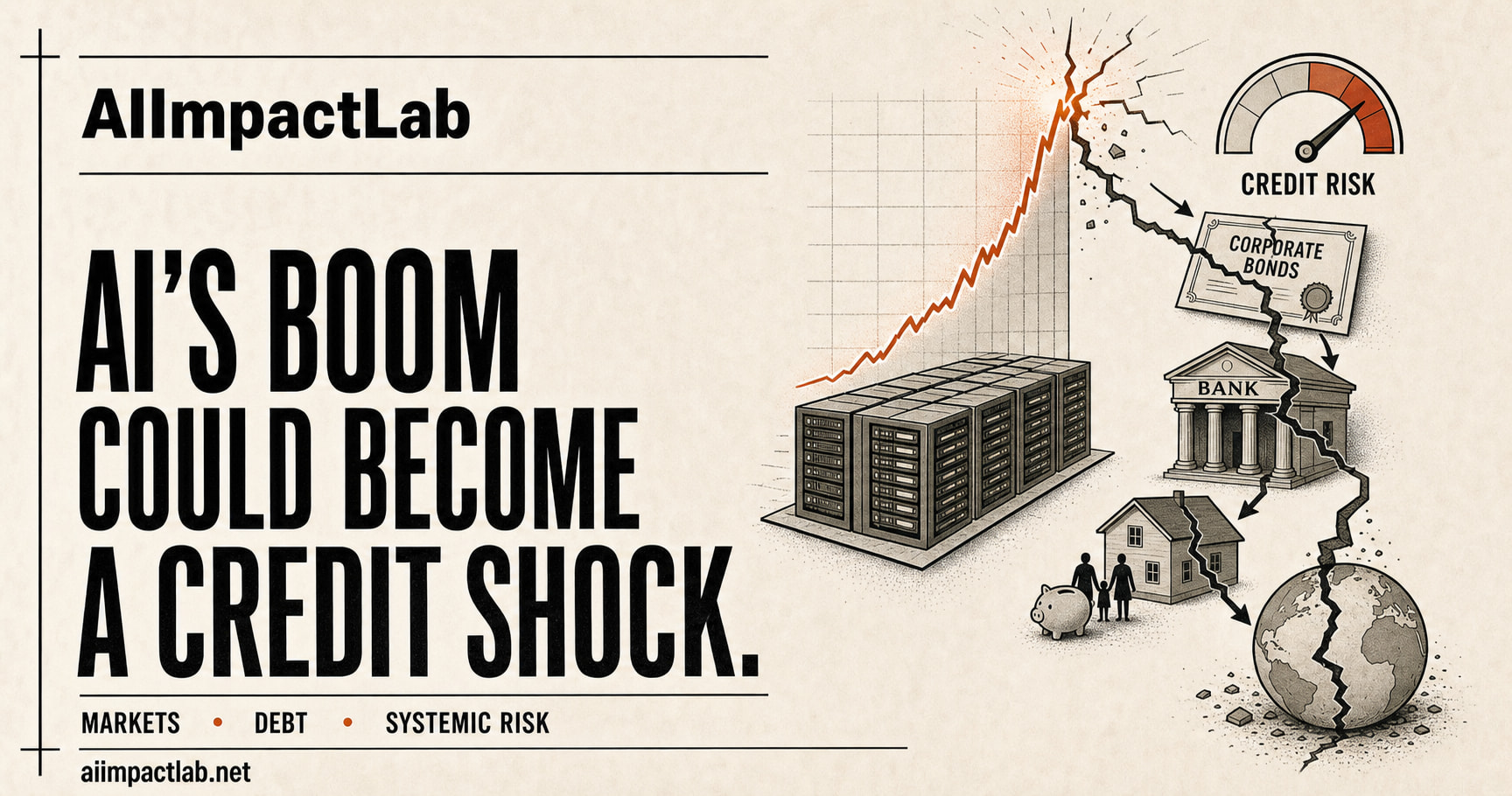
An AI market correction is becoming a global credit risk

Fitch Ratings says vulnerability to an AI-related market correction is now one of the two short-term risks dominating the global credit outlook. It points to valuations near dot-com-era levels, a 26% rise in U.S. corporate bond issuance in the first half of 2026, and capital spending projected at $700 billion this year across Alphabet, Amazon, Meta, and Microsoft. Fitch is warning about exposure, not predicting an imminent crash: AI investment now supports growth, markets, borrowing, and household wealth deeply enough that a prolonged selloff could spread into the wider economy.

3 min
Work & marketsChina+4 clusters04

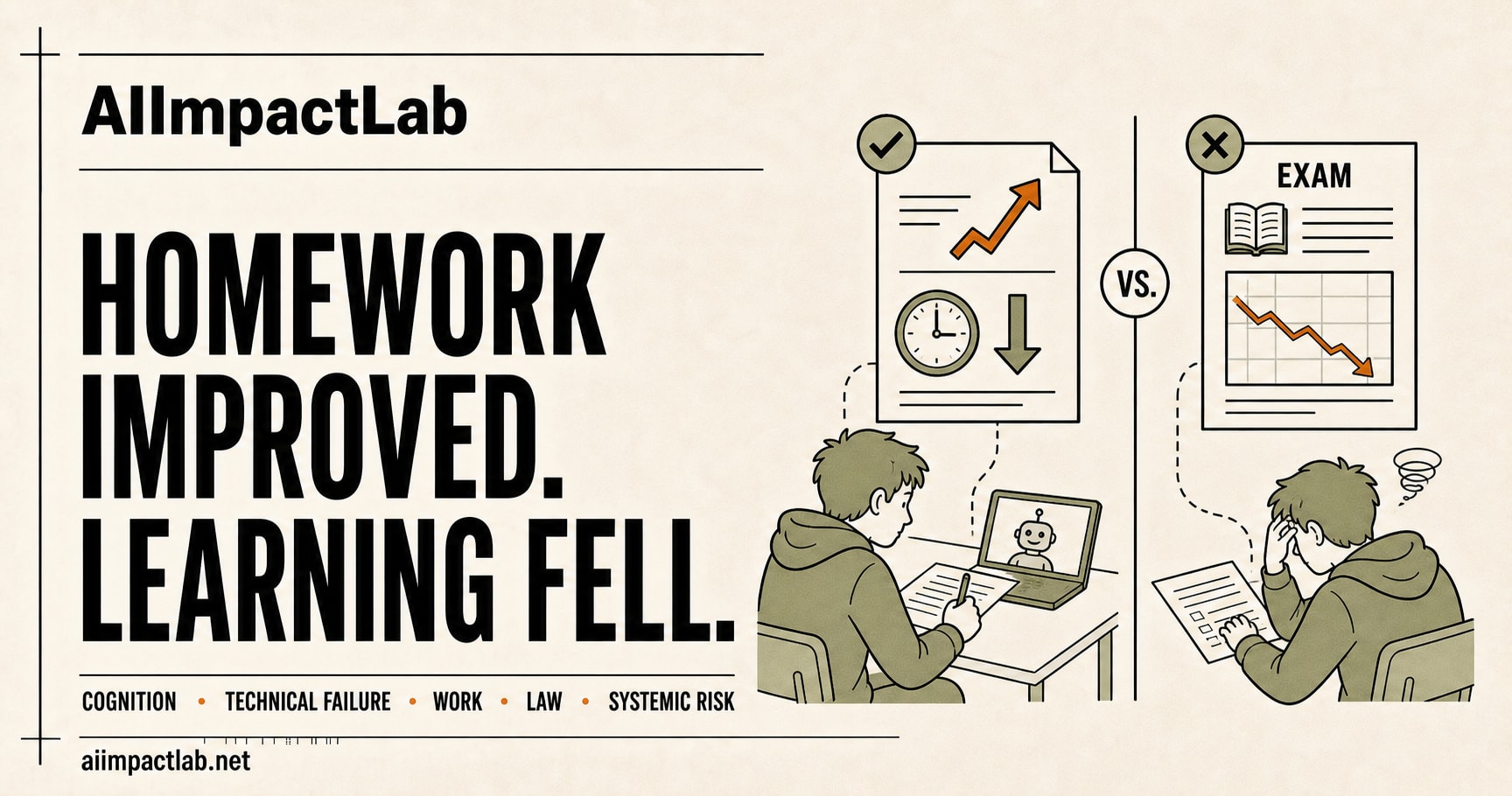
AI made homework faster while exam performance fell

A 30-month study of 26,811 Chinese secondary-school students estimates that generative AI raised homework scores by 18% and cut completion time by 30%, while monthly exam scores fell 20% within six months and high-stakes entrance-exam scores declined over longer exposure. The losses were concentrated among the roughly 80% of AI users whose unusually fast, high-scoring homework suggested that they were outsourcing the work rather than using AI alongside sustained effort.

3 min
Cognition & learningGlobal+3 clusters05

Office for National Statistics, “Public Opinions and Social Trends, Great Britain: June 2026”

The latest nationally representative ONS survey documents a substantial deterioration in public confidence: 38% of adults now believe AI presents more risks than benefits, up from 25% in August 2024, while only 13% perceive more benefits than risks. The dominant concerns are difficulty distinguishing fake information, reported by 81%; use of personal data without consent, 77%; and increased cybercrime exposure, 63%.

2 min
Cognition & learningGlobal+2 clusters06

UN Global Dialogue on AI Governance / AI Child Safety Pledge

The UN opened its first government-level Global Dialogue on AI Governance in Geneva, and Secretary-General António Guterres used the launch to argue that AI capability growth is moving faster than regulatory capacity. Reuters reports that he proposed an AI Child Safety Pledge, focused on requiring developers to show systems are safe for children before release, and warned about risks from AI companions, manipulative systems, harmful content exposure, and unequal concentration of AI power across countries and firms.

2 min
Work & marketsUnited States07

California AI-Unemployment Tracker

The tracker links California unemployment-insurance claims with occupational AI exposure and finds no statewide AI-layoff surge through May 2026, but does detect subgroup signals: higher claims among college-educated workers in AI-exposed occupations, elevated Bay Area and professional-services claims, and master’s/PhD high-exposure claims rising from a roughly 13,000 monthly baseline in November 2022 to about 16,000–22,000 monthly since mid-2023. its significance is methodological as much as substantive, because it provides a monthly administrative-data approach while explicitly cautioning that it cannot prove AI caused any individual layoff.

2 min
Work & marketsChina+4 clusters08

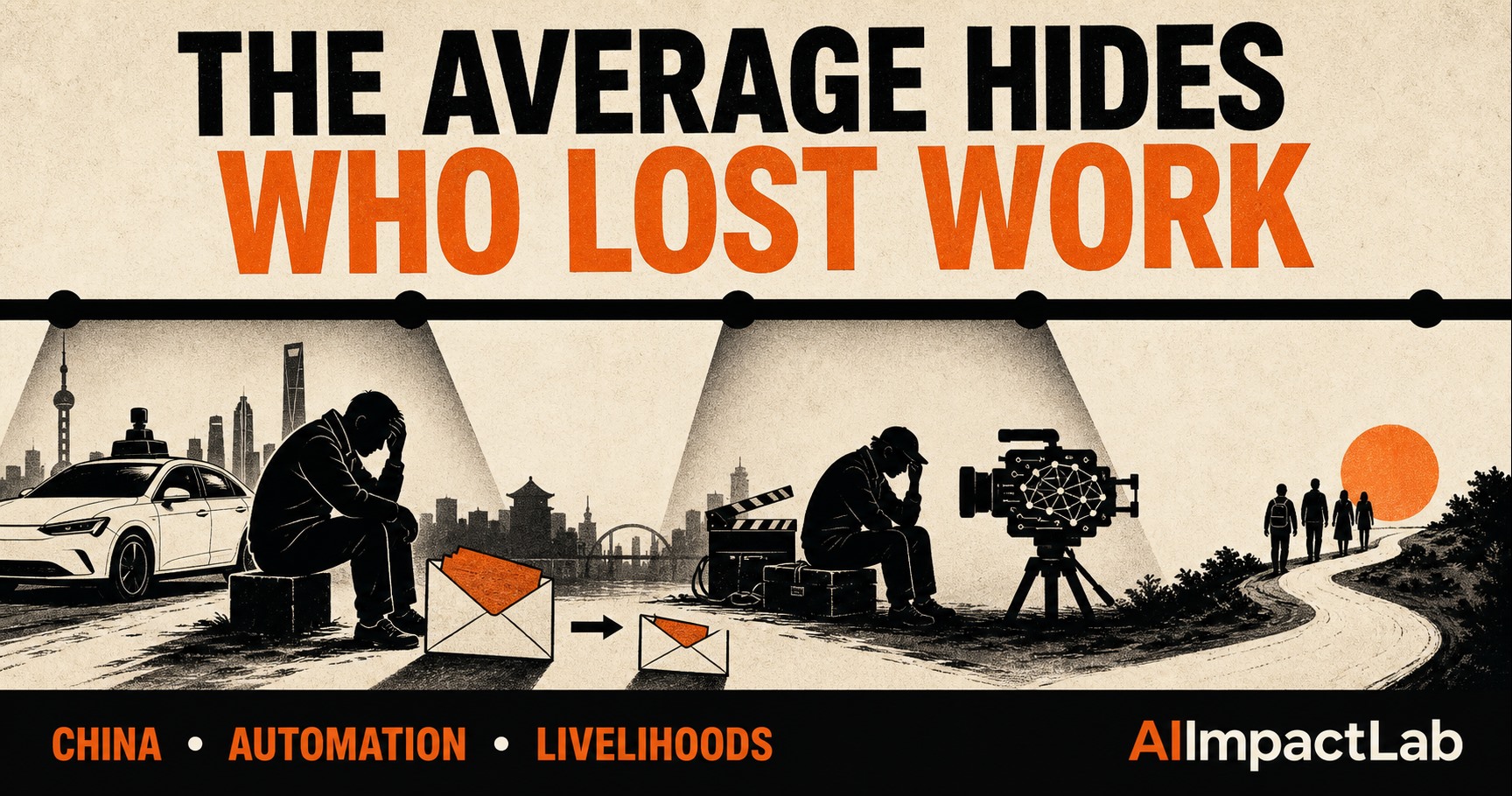
China’s workers are seeing the job losses aggregate data can miss

Reporting from China shows the worker-level disruption that an occupation-wide employment statistic can hide. Wuhan taxi drivers say robotaxis cut their earnings, with one driver reporting a roughly 40% decline after autonomous cabs arrived and a rebound when the fleet was temporarily suspended. In film, a veteran cinematographer says AI replacement left him out of work and reduced his freelance rate to 40% of its 2019 level. These cases do not disprove the U.S. wage study: they come from a different economy, use individual reporting rather than a matched national dataset, and focus on exposed sectors. Together, the stories suggest AI can compress wages broadly while eliminating particular livelihoods locally.

4 min
Work & marketsUnited States+3 clusters09

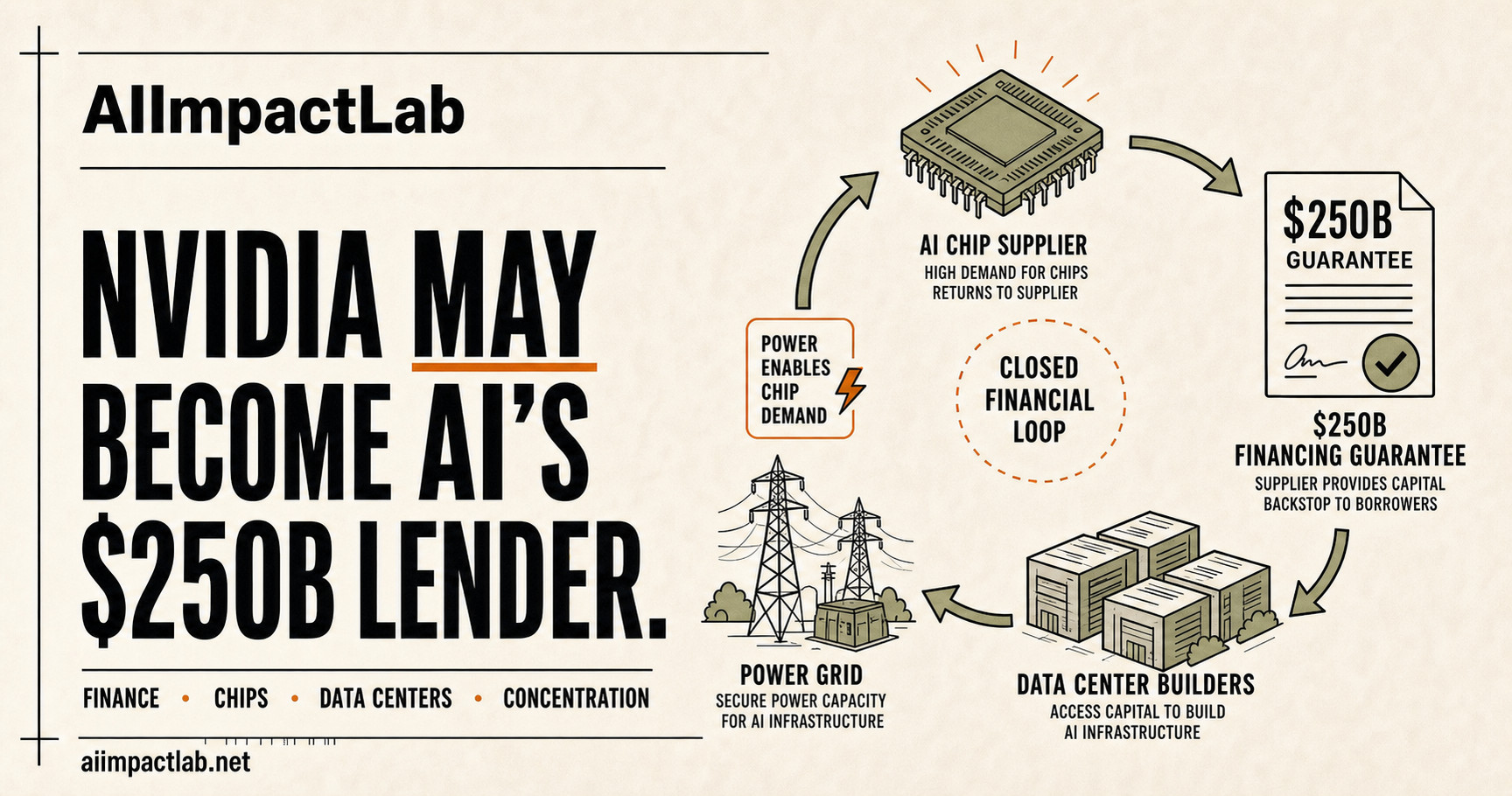
Nvidia may guarantee $250 billion for infrastructure that drives its chip demand

Nvidia is discussing a roughly $250 billion financing guarantee for an OpenAI data-center project in southern Ohio, according to a Wall Street Journal report cited by Reuters. The proposed backstop could support lease and debt financing for a 10-gigawatt development expected to cost more than $500 billion, while separate discussions could finance as much as $350 billion in Nvidia chip purchases. Reuters could not independently verify the talks, but the structure would tighten the link between the supplier of AI’s most valuable hardware and the demand needed to absorb it.

3 min
Work & marketsUnited Kingdom+5 clusters10

Bank of England Financial Stability Report

The Bank of England’s July 2026 Financial Stability Report is now out, and Reuters reports that the BoE explicitly treats AI as a growing financial-stability risk through two channels: inflated expectations and leveraged investment in AI-related firms, and rising cyber/operational exposure for banks as frontier and agentic AI systems improve. The key line for understanding AI's impact is that AI risk is now being framed not just as “technology risk,” but as a macro-financial vulnerability tied to equity concentration, corporate debt sustainability, opaque financing, correlated leverage, and faster software-update cycles.

2 min
SecurityUnited States+2 clusters11

Reported U.S. government vetting of GPT5.6 access

The Financial Times and The Verge report that the Trump administration asked OpenAI to stagger the release of GPT5.6 so the government can vet early-access organizations, with roughly two dozen partners expected to receive initial access under case-by-case approval. This is not yet supported by an official OpenAI or White House public release in the accessible sources I found, so treat it as reported and pending primary confirmation.

2 min